
Traditional Chinese medicine emphasizes the harmony between humanity and nature in its approach to health preservation. The flow of Qi (vital energy) in the universe and the changing seasons directly affect the balance of Qi and blood in the human body, as well as the Yin-Yang balance. The *Huangdi Neijing* (Yellow Emperor's Inner Classic), a foundational classic of traditional Chinese medicine, has long regarded "following the four seasons, adapting to cold and heat, and regulating Yin and Yang" as the highest principle of health preservation. In the Year of the Horse (2026), with its changing seasons and climate, human health will fluctuate accordingly. Therefore, *Huangdi Neijing Bingwu Year Seasonal Regulation*, specifically designed for ordinary people, has been created. Based on classical medical principles and centered on the annual Qi, it uses practical methods to help ordinary people without private doctors understand the Qi, practice self-care, prevent illness, and safely navigate the year.
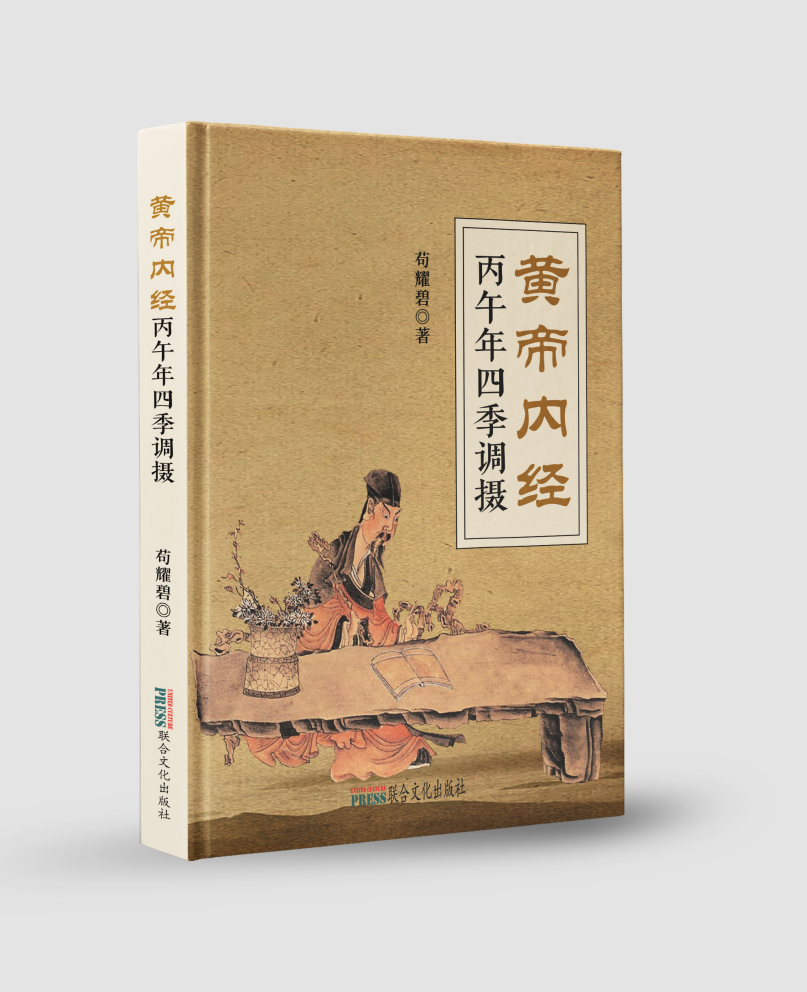
Within the Five Elements and Six Qi system, the Bingwu year exhibits clear climate and health patterns. Bing represents Yang Water, and Wu represents Lesser Yin Fire. With an excess of Water in the annual cycle, Lesser Yin Fire governs the heavens, while Yangming Dry Metal resides in the earth. The overall climate throughout the year is characterized by an excess of cold Water, alternating periods of cold and heat, and alternating dryness and cold . Coldness easily suppresses Heart Fire and damages Kidney Yang. In the first half of the year, Fire Qi dominates, leading to external cold and internal heat. In the second half, Dry Metal prevails, making the Lungs and Kidneys susceptible to damage. Therefore, the Heart, Kidneys, and Lungs become the key focus for health preservation throughout the year. This book, based on this core annual pattern, constructs a complete, practical, and actionable health preservation system specifically for the Bingwu year, comprehensively covering health needs from theory to practice, from daily life to emergencies.
The book doesn't immediately delve into methods of health preservation, but instead delves into the origins of the *Huangdi Neijing* (Yellow Emperor's Inner Classic), providing readers with a clear framework for understanding Traditional Chinese Medicine (TCM) health preservation. Starting with the origins and theoretical formation of the *Huangdi Neijing*, it explains core theories such as Qi theory, Yin-Yang and Five Elements, Heavenly Stems and Earthly Branches, Tai Chi and Bagua, and the Hetu and Luoshu diagrams , breaking down the barriers of obscurity in traditional medical texts. The book clearly states that "Qi" is the foundation of life, with Yuan Qi, Zong Qi, Ying Qi, and Wei Qi jointly maintaining human life activities; Yin-Yang balance is the core of health, and imbalance leads to various diseases; the Five Elements correspond to the five internal organs, five seasons, and five directions, serving as the fundamental basis for seasonal health regulation. Simultaneously, it incorporates ancient astronomical knowledge such as the Big Dipper calendar and gnomon shadow measurement to elucidate the close relationship between the movement of Qi in heaven and earth and the rhythms of the human body, enabling readers not only to know what it is, but also why it is, truly understanding the underlying logic behind health preservation.
After laying the theoretical groundwork, the book moves on to its core chapter on precise health regulation for the four seasons in the year of Bingwu (2026 ). Based on the four seasons of spring, summer, autumn, and winter, and combined with the changes in solar terms and the characteristics of the annual fortune, it provides detailed health preservation plans for different seasons, organs, and constitutions, making it a veritable "action guide" for health preservation throughout the year.
Spring is governed by the Jueyin Wind Wood element, a time of rising Yang energy. However, at the beginning of the Bingwu year (2016), the cold air lingered, and the weather was windy and unpredictable. The core principles of health preservation were to soothe the liver, regulate Qi, protect against wind and cold, and promote the rise of Yang energy . Following the principles of the *Huangdi Neijing* (Yellow Emperor's Inner Classic), which states, "The three months of spring are called the time of sprouting; go to bed early and rise early, and take long walks in the courtyard," one should go to bed early to align with the storage of Yin blood and rise early to align with the rise of Yang energy. In terms of diet, one should reduce sour foods and increase sweet foods, eating more foods that warm and nourish the spleen and kidneys, such as black sesame seeds, walnuts, and yams, while avoiding raw, cold, and cooling foods to prevent damage to Yang. At the same time, one should pay attention to emotional well-being, avoiding anger that could harm the liver, and using simple liver-guiding exercises to unblock meridians, harmonize Qi and blood, and align with the rising Qi of spring, laying a foundation for health throughout the year.
Summer belongs to the element of fire, and the heart energy is dominant. However, excessive water influence can easily lead to a "cold enveloping fire" phenomenon, where high temperatures and cold intertwine. The key to health preservation in this season is to clear heat and reduce fire, protect the heart's yang energy, and prevent heatstroke and dampness. In terms of daily routine, go to bed late and rise early, and take a proper midday nap to replenish heart energy and stabilize the mind. Avoid excessive sweating during exercise to prevent the loss of yang energy and depletion of body fluids. Avoid excessive cold drinks and greasy foods; eat more lotus seeds, lilies, mung beans, watermelon, and other foods that clear heat, relieve summer heat, nourish yin, and generate fluids, while also warming the spleen and stomach to prevent the internal generation of cold and dampness. The book provides simple conditioning methods such as heart-guiding exercises and the Six Qi Therapy for the Heart to easily alleviate discomfort, addressing common summer ailments like irritability, palpitations, insomnia, and fatigue.
Autumn is dominated by the Yangming dryness metal element, and the combination of dryness and cold makes it a crucial period for nourishing the lungs and kidneys. The core of health preservation is to moisten the lungs and generate fluids, warm and nourish the kidney qi, and astringe the lung qi . Follow the principle of "early to bed and early to rise, like the rooster" during the three months of autumn. Go to bed early to cultivate the astringent nature, and rise early to align with the clearing and descending of lung qi. The diet should focus on nourishing yin and moistening dryness, consuming more foods such as white fungus, snow pears, honey, lilies, and sesame seeds, while reducing spicy, fried, and dispersing foods to alleviate symptoms of autumn dryness such as dry mouth, dry cough, and dry skin. At the same time, pay attention to keeping warm, especially the waist, abdomen, and feet, to prevent cold from invading and damaging kidney yang. Combine this with lung-guiding exercises to enhance lung function and prepare for the winter's dormancy and storage phase.
Winter is the season dominated by the sun and cold water, the time of year when the coldest air is at its peak and Yang energy is stored away. The core of health preservation during this period is to conserve Yang energy, warm the kidneys, strengthen the body's foundation, and protect essence. Adhere to the principle of "early to bed and late to rise during the three winter months, waiting for the sunlight," avoid the cold and stay warm, and reduce unnecessary outings and staying up late. Pay special attention to keeping your feet, waist, and back warm, as the kidneys originate in the waist and feet are the root of the kidneys; keeping them warm protects the kidneys. Eat more warm and nourishing foods, such as mutton, goji berries, black beans, and longan, to replenish kidney essence and warm Yang energy. Exercise should be gentle, such as walking or the Eight-Section Brocade exercises, stopping only when you sweat slightly to avoid excessive sweating which can damage Yang. Simultaneously, use kidney-guiding exercises to strengthen kidney Qi, improve physical constitution, and comfortably get through the winter.
Beyond the usual seasonal adjustments, this book incorporates diverse and practical content such as age-appropriate health preservation, constitution identification, five-tone therapy, and folk health preservation , making health preservation more targeted. For children with their "immature yin and yang" constitution, it specifies feeding taboos such as no salt for children under 3 months, no honey for children under 1 year, and no tonics for children under 5 years, aligning with children's physiological characteristics. It also customizes health preservation plans for different stages such as adolescence, reproductive age, menopause, and old age according to the life cycles of women ("seven times seven") and men ("eight times eight"). Based on the five-state constitution and five-element constitution of the *Huangdi Neijing*, it provides differentiated conditioning suggestions. Furthermore, it innovatively incorporates five-tone therapy , with the five tones (Jiao, Zheng, Gong, Shang, Yu) corresponding to the liver, heart, spleen, lungs, and kidneys respectively, allowing for the conditioning of internal organs through listening to music and chanting, making it suitable for all ages and easy to implement.
Throughout the book, the core concept of "treating disease before it manifests" from the *Huangdi Neijing* (Yellow Emperor's Inner Classic) is consistently applied, which is also the book's most valuable aspect. Combining the characteristics of the year's (丙午) energy flow, the book details specific methods for epidemic prevention, seasonal disease management, and daily disease prevention. From four dimensions—daily life, diet, emotions, and meridians—it guides readers to harmonize Yin and Yang and protect their vital energy. It emphasizes "prioritizing the year's energy, not disrupting the harmony of nature," meaning not violating the laws of nature's energy flow, avoiding blind supplementation or reckless depletion, and cultivating vital energy and avoiding pathogenic factors through everyday actions to truly achieve disease prevention and longevity.
"The Yellow Emperor's Inner Classic: Seasonal Regulation in the Year of Bingwu" is not a dry theoretical classic, but a practical, hands-on, and professional health preservation manual for everyone. It abandons complex medical jargon, using simple language, clear steps, and relatable methods to apply millennia-old traditional Chinese medicine wisdom to daily life, meals, and emotional regulation. Regardless of age, gender, or prior knowledge of traditional Chinese medicine, everyone can easily understand and quickly learn how to use it, following the seasonal rhythms of the year 2026 (Bingwu year) to nourish the internal organs, balance Yin and Yang, and achieve mental and physical well-being.
In today's fast-paced life, we don't need expensive health maintenance costs or professional medical guidance. Simply hold this comprehensive guide to health preservation, follow the wisdom of the *Huangdi Neijing* (Yellow Emperor's Inner Classic), harmonize with the four seasons, regulate qi and blood, and nourish the internal organs to stay away from illness and maintain health. In the year of Bingwu (2026), may every reader rely on this book to align with the natural order, protect their body and mind, and enjoy a long and healthy life free from illness and worry, fully embracing the pleasures of old age.
Disclaimer: This article is reproduced from other media. The purpose of reprinting is to convey more information. It does not mean that this website agrees with its views and is responsible for its authenticity, and does not bear any legal responsibility. All resources on this site are collected on the Internet. The purpose of sharing is for everyone's learning and reference only. If there is copyright or intellectual property infringement, please leave us a message.
©copyright2009-2020New York Fashion News Contact Us SiteMap
