
In an era where the global fashion industry is undergoing unprecedented transformation, emerging designer and researcher Kang Zhemiao has attracted growing international attention for her pioneering work at the intersection of digital technology, sustainable materials, and industrial system innovation.
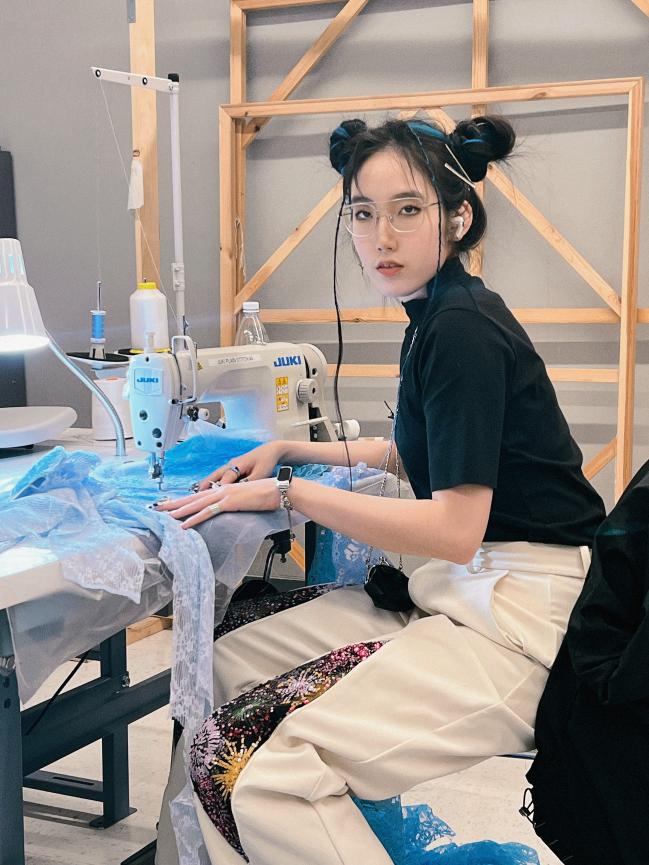
Through a series of recent academic publications in international peer-reviewed journals, Kang presents a comprehensive framework that redefines how fashion design operates in the digital age. Her research, published in journals such as Education Research and Innovation and the Journal of International Social Science, examines how advanced technologies are not only enhancing creative processes but fundamentally restructuring the architecture of the fashion industry.
Traditionally, fashion design has been viewed as a largely artistic and craft-driven discipline. However, Kang’s research challenges this paradigm by demonstrating that digital technologies—including artificial intelligence, big data analytics, and virtual simulation systems—are transforming design from an isolated creative activity into a fully integrated industrial system.
Her studies reveal that digital tools enable real-time optimization of design workflows, allowing designers to simulate garment structures, evaluate performance, and iterate concepts with unprecedented efficiency. More importantly, these technologies facilitate the integration of upstream and downstream processes, linking creative design with manufacturing, logistics, and consumer interaction.
Kang proposes that the fashion industry is evolving from a closed production model into an open, data-driven ecosystem, where information flows seamlessly across all stages of value creation. This transition not only enhances operational efficiency but also reshapes how value is generated, distributed, and experienced within the industry.
Industry analysts suggest that such system-level thinking represents a significant departure from conventional design methodologies, positioning Kang’s work within a broader movement toward digital industrial transformation.
Beyond digital innovation, Kang’s research places strong emphasis on environmental sustainability, addressing one of the most urgent challenges facing the global apparel sector.
Her work outlines a multidimensional approach to sustainable fashion design, incorporating eco-friendly material selection, lifecycle assessment frameworks, and circular production strategies. By advocating for the use of recyclable fibers, biodegradable materials, and low-impact processing technologies, Kang demonstrates how environmental considerations can be embedded directly into the design process.
A key contribution of her research is the concept of closed-loop material systems, in which garments are designed for reuse, disassembly, and recycling from the outset. This approach is further supported by modular design strategies that allow components of garments to be replaced or repurposed, extending product lifespan and reducing waste.
Additionally, Kang highlights the role of data-driven technologies in sustainability, including carbon footprint tracking systems and supply chain monitoring tools. These innovations enable companies to optimize resource allocation, reduce emissions, and improve transparency across the entire production cycle.
Her findings suggest that sustainability is no longer a peripheral concern but a central driver of innovation, capable of reshaping both industrial structures and consumer behavior.
One of the defining aspects of Kang Zhemiao’s research is her emphasis on the evolving role of the designer. Rather than functioning solely as creators of aesthetic products, designers are increasingly positioned as architects of complex systems, integrating artistic vision with technological infrastructure.
Kang argues that digital platforms and cross-disciplinary collaboration are enabling designers to engage with broader industrial networks, including engineering, data science, and environmental systems. This shift expands the scope of design practice, transforming it into a strategic discipline that influences not only product development but also business models and industry ecosystems.
Her work also explores the experiential dimension of fashion, demonstrating how virtual reality and augmented reality technologies can enhance consumer engagement by creating immersive environments for product interaction. These developments signal a transition from static product consumption to dynamic, experience-driven value creation.
Experts note that Kang’s research arrives at a critical moment for the global fashion industry, which is facing mounting pressure to adapt to digital transformation and environmental sustainability simultaneously.
By integrating these two domains, her work offers a forward-looking framework that addresses both technological and ecological challenges. The convergence of artificial intelligence, data systems, and sustainable materials, as outlined in her studies, provides a roadmap for building more resilient, efficient, and responsible fashion ecosystems.
Moreover, her emphasis on cross-border digital platforms highlights the potential for global collaboration, enabling designers, manufacturers, and consumers to participate in interconnected networks that transcend traditional industry boundaries.
As a young researcher with a background in both design and technology, Kang Zhemiao represents a new generation of innovators redefining the future of fashion. Her interdisciplinary approach, combining creative exploration with system-level analysis, has begun to resonate within both academic and industry circles.
Observers suggest that her work contributes to a broader rethinking of how fashion is conceptualized and produced in the 21st century. By positioning design as a driver of technological integration and sustainable transformation, Kang’s research reflects an emerging paradigm in which creativity, intelligence, and responsibility are deeply intertwined.
As the industry continues to navigate complex global challenges, voices like Kang’s are likely to play an increasingly important role in shaping the direction of fashion’s next evolution.(Daniel Carter)
Disclaimer: This article is reproduced from other media. The purpose of reprinting is to convey more information. It does not mean that this website agrees with its views and is responsible for its authenticity, and does not bear any legal responsibility. All resources on this site are collected on the Internet. The purpose of sharing is for everyone's learning and reference only. If there is copyright or intellectual property infringement, please leave us a message.
©copyright2009-2020New York Fashion News Contact Us SiteMap
